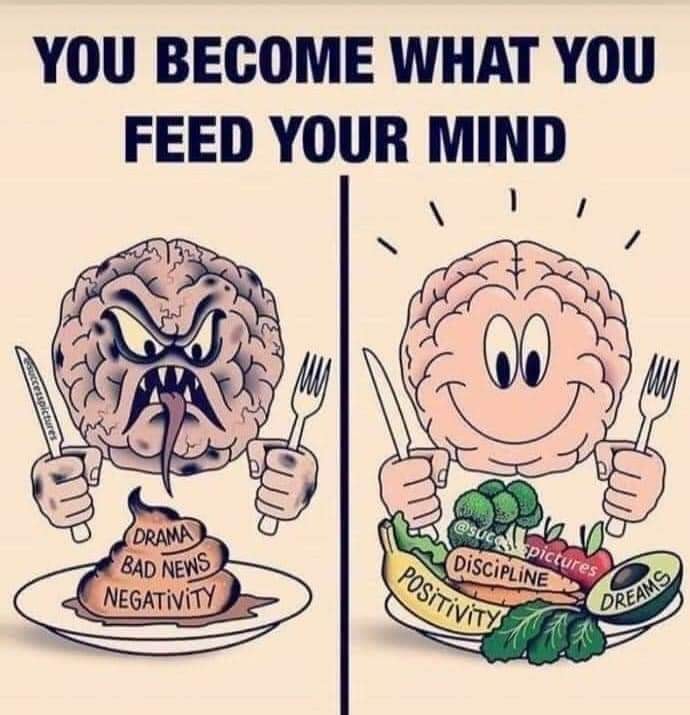
A good Brain Diet takes careful consideration. You don't put the wrong fuel in your car and expect it to run well. Your brain is the architect of your success, so it is important to look after it.
`Feeding your brain means giving it the same care and nourishment you would give your body. Just as healthy food strengthens your body, positive thoughts, learning, and meaningful experiences strengthen your mind. Reading books, listening to new ideas, asking questions, and surrounding yourself with supportive people can all help your mind grow. It also means being mindful of what you allow into your thoughts—choosing inspiration over negativity whenever possible. When you feed your mind with knowledge, creativity, and positivity, it becomes stronger, more curious, and better prepared to face challenges and opportunities in life.
Stress can have a powerful effect on the brain, especially when it lasts for a long time. When a person is stressed, the brain releases hormones like cortisol that prepare the body to react quickly to danger. While this response can be helpful in short situations, constant stress can make it harder for the brain to function properly. It may affect memory, concentration, and decision-making, and it can make people feel overwhelmed or anxious. Over time, long-term stress can also impact mood and emotional balance, making it more difficult to think clearly and stay calm. Learning ways to manage stress is important for keeping the brain healthy and functioning well.

MINDENGINEER
BRAIN DIET
iT'S NOT JUST FOOD

SMOKING
Many people say they smoke to relieve stress. The sad reality is that smoking actually stresses the body and your brain.
Nicotine is one of nature's most powerful insecticides and is also a powerful stimulant.
The trouble is that as it raises your heart rate, it constricts the blood vessels and increases blood pressure, which increases your chance of a heart attack and stroke.
Stress also negatively affects the immune system meaning that cell mutation goes unchecked which can lead to cancers forming
To summarise, smoking has many harmful effects on a person’s health. The chemicals in cigarettes damage the lungs and make it harder for the body to get the oxygen it needs. Over time, smoking can lead to serious diseases such as Lung Cancer, Heart Disease, and Chronic Obstructive Pulmonary Disease. It can also weaken the immune system, making it harder for the body to fight infections. In addition, smoking can damage blood vessels, increase blood pressure, and raise the risk of strokes. These health problems can greatly reduce a person’s quality of life and shorten their lifespan, which is why avoiding or quitting smoking is important for maintaining good health
Nicotine is one of nature's most powerful insecticides and is also a powerful stimulant.
The trouble is that as it raises your heart rate, it constricts the blood vessels and increases blood pressure, which increases your chance of a heart attack and stroke.
Stress also negatively affects the immune system meaning that cell mutation goes unchecked which can lead to cancers forming
To summarise, smoking has many harmful effects on a person’s health. The chemicals in cigarettes damage the lungs and make it harder for the body to get the oxygen it needs. Over time, smoking can lead to serious diseases such as Lung Cancer, Heart Disease, and Chronic Obstructive Pulmonary Disease. It can also weaken the immune system, making it harder for the body to fight infections. In addition, smoking can damage blood vessels, increase blood pressure, and raise the risk of strokes. These health problems can greatly reduce a person’s quality of life and shorten their lifespan, which is why avoiding or quitting smoking is important for maintaining good health
ALCOHOL
Alcohol can have a strong negative impact on both the brain and a person’s ability to be productive. Because alcohol slows down the central nervous system, it affects how the brain processes information. Even small amounts can make it harder to concentrate, think clearly, and make good decisions. Memory can also be affected, meaning tasks may take longer to complete or be done less accurately. When alcohol is used frequently, it can disrupt sleep and reduce energy levels, leaving a person feeling tired and less motivated the next day.
Over time, heavy drinking can cause more serious problems for the brain and overall performance. Alcohol can damage brain cells and interfere with communication between different parts of the brain, which can affect learning, memory, and emotional control. Long-term misuse of alcohol can also increase the risk of conditions such as Alcohol Use Disorder and alcohol-related brain damage. These effects can reduce a person’s ability to focus, stay organised, and maintain consistent productivity in school, work, or daily responsibilities.
Over time, heavy drinking can cause more serious problems for the brain and overall performance. Alcohol can damage brain cells and interfere with communication between different parts of the brain, which can affect learning, memory, and emotional control. Long-term misuse of alcohol can also increase the risk of conditions such as Alcohol Use Disorder and alcohol-related brain damage. These effects can reduce a person’s ability to focus, stay organised, and maintain consistent productivity in school, work, or daily responsibilities.


DRUGS
Class A drugs can have serious effects on both the brain and a person’s ability to be productive. These substances interfere with the brain’s normal chemical signals, often causing intense but short-lived feelings of euphoria followed by crashes in mood, energy, and motivation. Drugs such as Class A Drugs (UK), including substances like Cocaine and Heroin, can damage brain cells and affect areas responsible for decision-making, memory, and self-control. As a result, it becomes harder for individuals to concentrate, plan tasks, or maintain consistent performance at work or school. Over time, repeated use can lead to dependency, poor mental health, and long-term cognitive problems, all of which greatly reduce productivity and overall quality of life.